



Rear Receiver
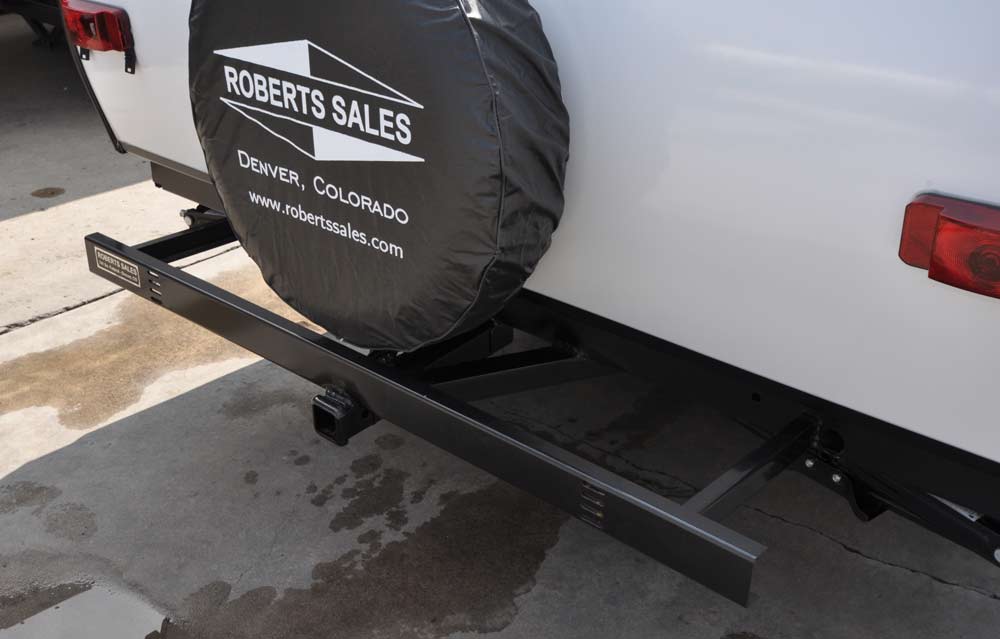
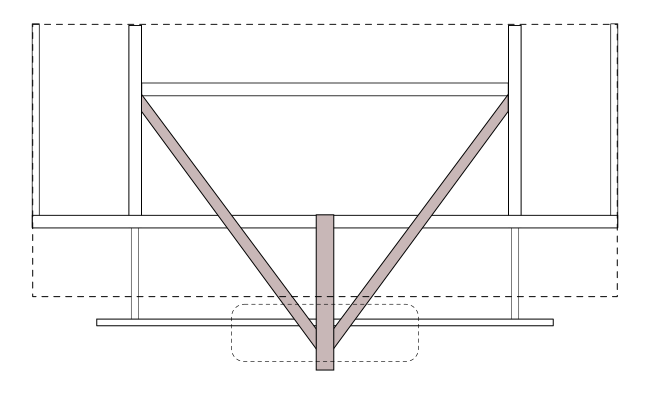
The rear receiver offers an alternative to roof-mounted bike racks and installs a 2" receiver to the back of the trailer. It is positioned using the rear bumper* but most of the vertical strength of the receiver comes from the two diagonal supports welded to the main frame. 1-1/4" Class II size receivers are also available.
All customers requesting a rear receiver are required to sign our Rear Receiver Release Form (pdf 26.2k) acknowledging their responsibility for the rear receiver (and any amount of weight placed on it). It's a tad silly, perhaps, but one bad apple...
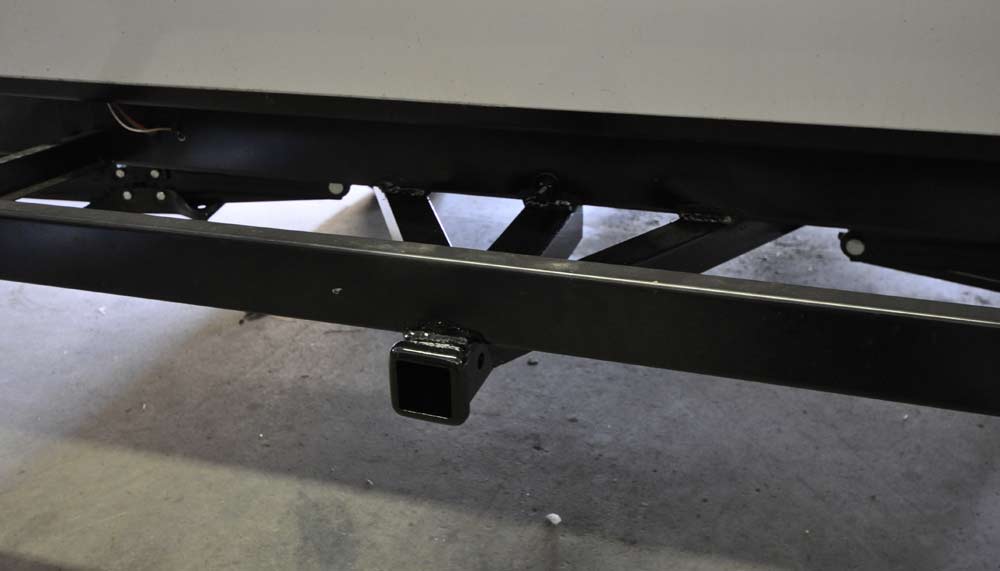
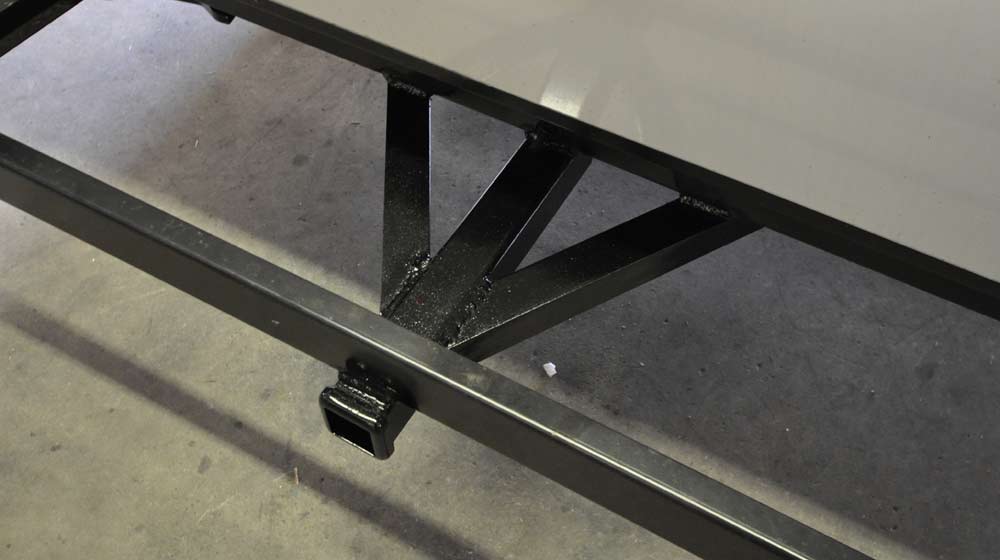
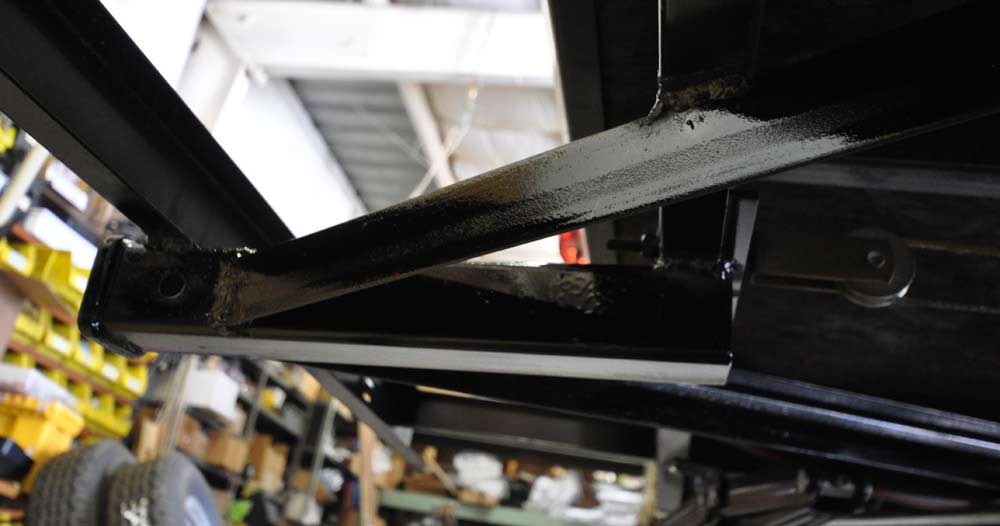
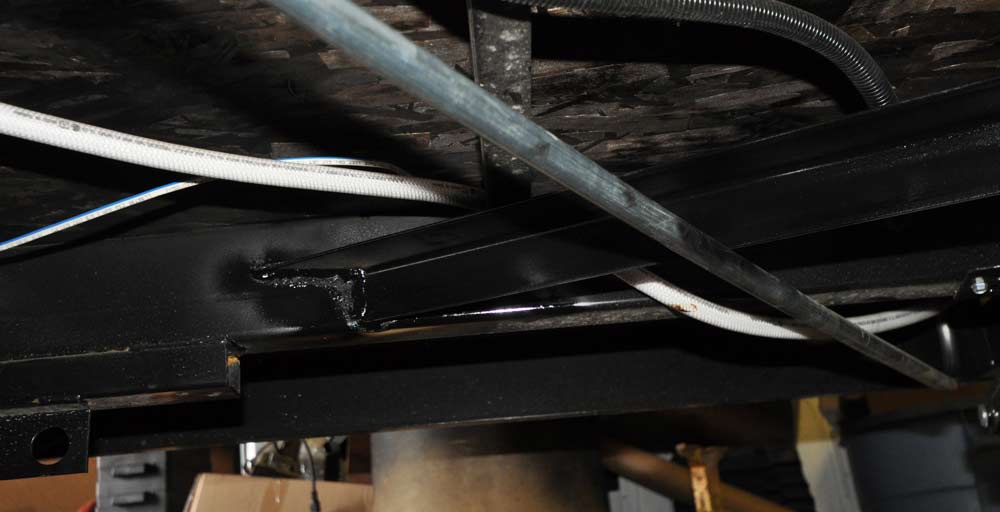

"Do you have a 'rear receiver kit' you can ship to me?"
No, sorry. With so much variation between models and from one year to the next, each rear receiver is a custom installation. Each support is measured out and cut by hand. In some cases, adjustments to the spare tire carrier is necessary.
We'd recommend asking a local welding shop if they could install one. All they need is the receiver tube (here's a search for the tube) and the angle-iron. We use 24" receiver tubes and then cut them down to the size we need for each installation.
We've included extra pictures of the installed receiver  to assist the welding shop.
Bike Rack
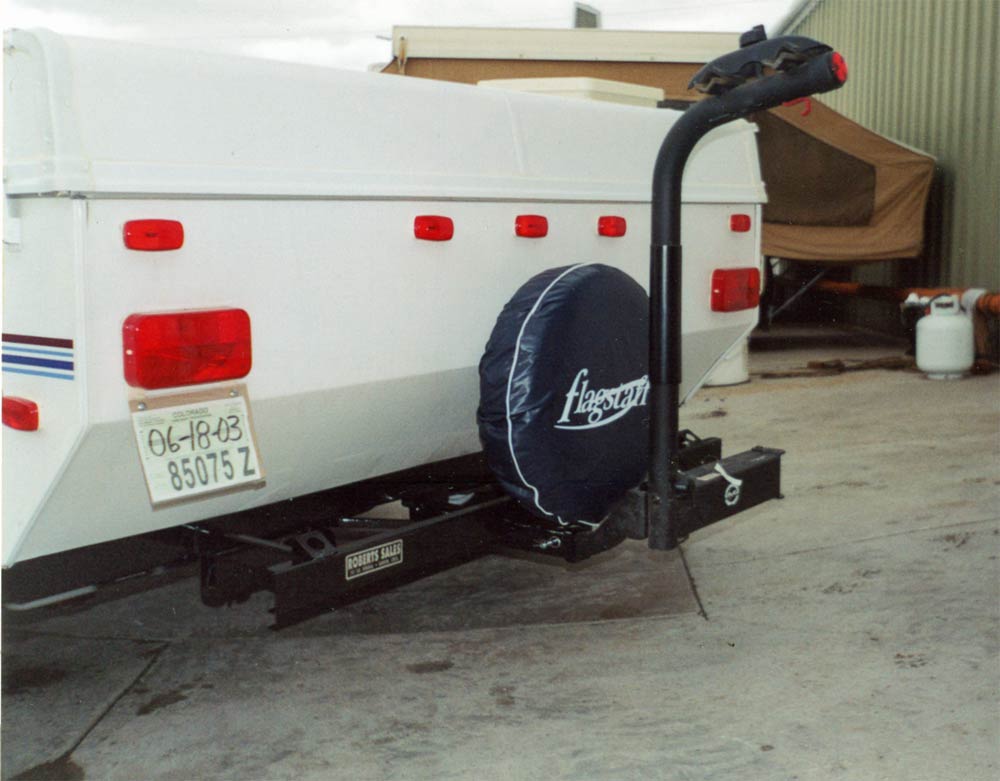
The benefit of a receiver-mounted bike rack:
PRO
- Bikes are easier to access in comparison to lifting the bike on top of the camper roof.
- The same bike rack can be used with the camper or with just the tow-vehicle.
- If you already have a bike rack the cost is much less for a rear receiver than for a roof-mounted rack and bike-yoke system.
CON
- The bike rack and bikes hanging off the back of the camper affects the camper's tongue weight more than if the bikes were mounted on a roof rack. This is not an issue so long as the tongue weight does not drop below 10% of the total weight of the trailer (weight details).
- The receiver-mounted rack attaches to the camper in only one spot (and typically with a pull-pin) so the bikes may shift and bounce more than on a roof-mounted bike rack where the rack is mounted in four positions. One way to reduce this effect is to tie down the bikes to the trailer using straps or bungee cords and the roof latches (or bumper) as anchor points.
Tandem Towing
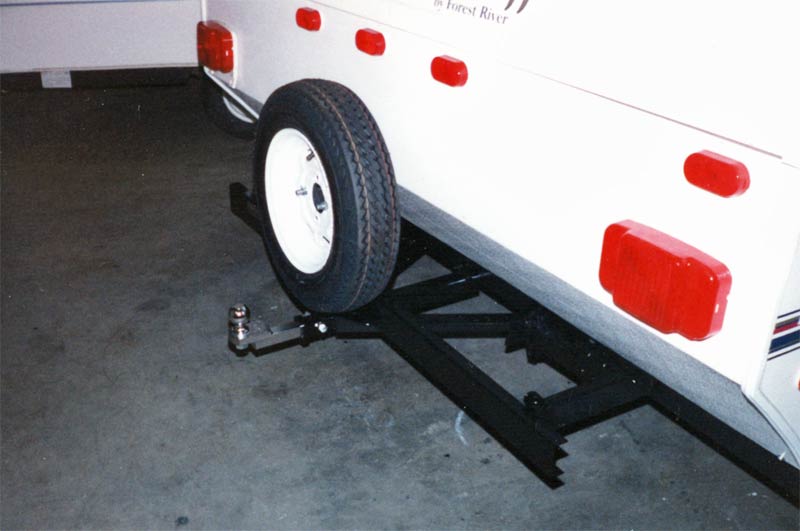
1 1/4" shown, 2" also available
NOTE: Tandem towing with a pop-up camper is not recommended. The weight distribution across all vehicles, taking safe tongue-weight parameters into consideration, and the relatively "active" response of a single axle trailer (vs. multi-axle trailers) towing another single axle trailer makes tandem towing a difficult proposition.
That said, we cannot monitor what someone does once they leave our lot. To that end, all customers requesting a rear receiver are required to sign our Rear Receiver Release Form (pdf 26.2k) acknowledging their responsibility for the rear receiver.
If you do decide to attempt towing a second trailer, make sure that the second trailer weighs less than the camping trailer. If it does not the rig will be unstable and could result in a "wag the dog" situation. Also, make absolutely sure that the tongue weight of the second trailer does not push down on the rear receiver enough to create negative tongue-weight on the camping trailer. This will also result in an unstable towing situation (weight details).
*Most T-series campers do not have a bumper. T-series rear receiver installations include adding a bumper to the rear of the camper.
 Back to Options
Privacy © 2009-2024 Roberts Sales. All rights reserved.